
Hera’s asteroid questions: what the mission may reveal about planetary defence
ESA has outlined ten mysteries for Hera to investigate at the Didymos–Dimorphos system. The questions include what DART’s impact changed, how the small moonlet holds together and what remains uncertain about the asteroid pair.

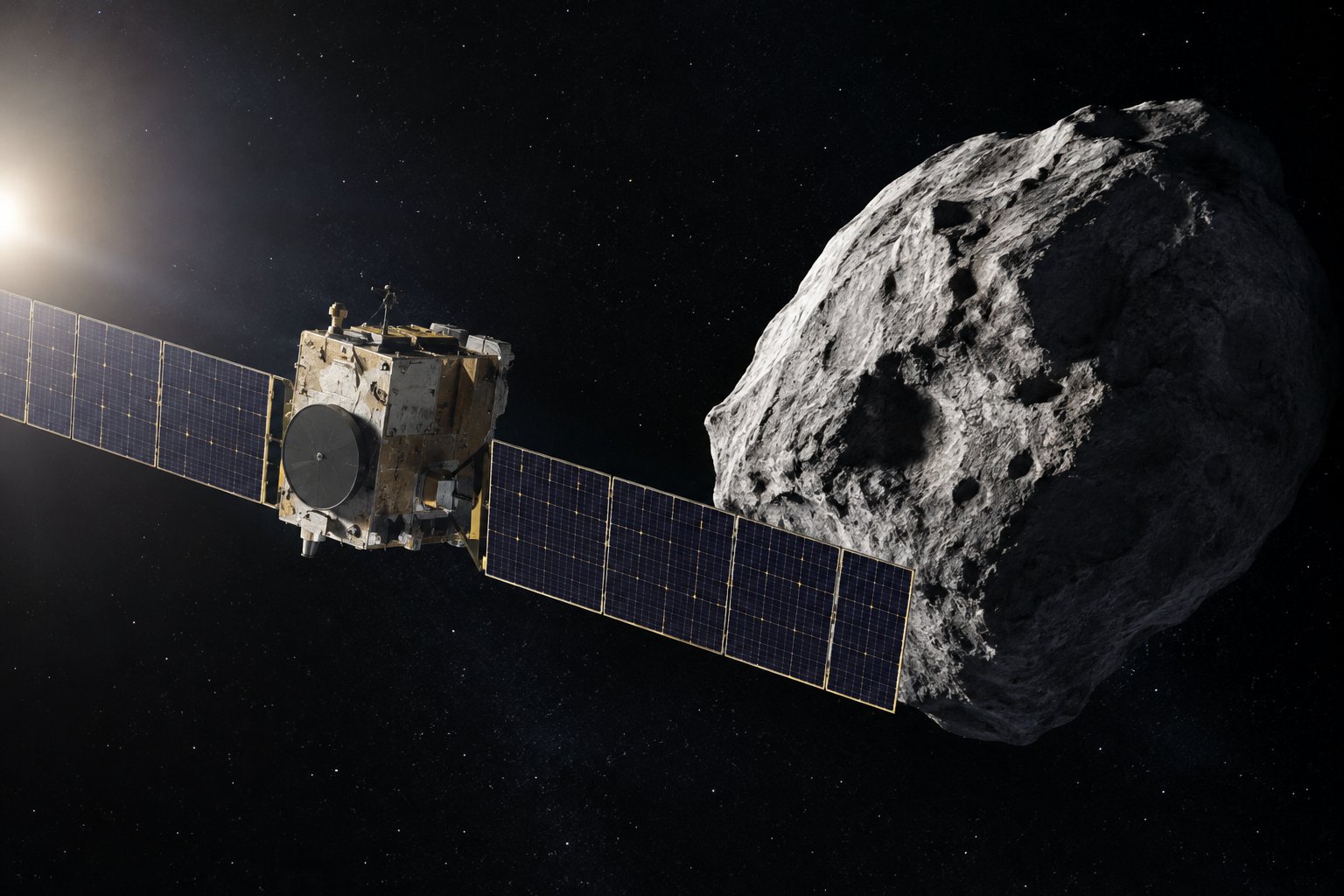
The European Space Agency has outlined ten asteroid mysteries for its Hera mission to investigate at the Didymos–Dimorphos system. ESA says the spacecraft is due to reach its target body “this month”; its close-up survey is intended to examine the aftermath of NASA’s DART impact and help researchers understand how well a kinetic impact can deflect an asteroid.
What Hera is set to investigate
ESA’s account describes questions ranging from the impact’s physical effects to the forces that shape the asteroid pair. The first images are expected to help resolve whether DART left a large crater on Dimorphos. The article says the impact is estimated to have displaced about 16 million kilograms of dust, fragments and larger boulders—around 0.5% of Dimorphos’s estimated mass. The crater’s actual size and shape remain unknown.
That uncertainty matters because Dimorphos has very weak gravity. ESA says its response to the collision depends in part on the cohesion of its surface material: how strongly particles and rocks stick together. A surface with low cohesion could respond differently from one with stronger cohesion. Simulations cited by ESA range from a crater to a change extending across the asteroid’s surface.
Debris and motion after the impact
Hera also needs to establish whether impact debris remains around Didymos and Dimorphos. ESA identifies this as a mission-safety question: any material still nearby could pose a collision risk. Modelling suggests most debris has left the system, while some material may have fallen back onto the asteroids. ESA cites a recent study estimating that more than 93.5% of DART’s ejecta escaped within two years, with 0.002% remaining in the vicinity.
Another open question is how much Dimorphos is tumbling. Before DART arrived, it was assumed to be tidally locked to Didymos—rotating so that the same side always faced its larger companion. Because the impact was off-centre, it could have changed Dimorphos’s rotation. ESA says observations of the pair’s changing brightness tentatively suggest tumbling, but its extent is not known.
This rotation is relevant to Hera’s operations as well as to the science. ESA says later autonomous flight will rely on tracking surface features; complex motion could make those features move in less predictable ways. Researchers also want to understand how quickly Didymos’s gravity might slow the tumbling.
How did the smaller asteroid form—and what holds it together?
ESA describes a prevailing theory that asteroid moonlets can form from material shed by a rapidly spinning parent body. The Yarkovsky–O'Keefe–Radzievskii–Paddack effect, usually shortened to YORP, is a small force linked to uneven heating by sunlight on an irregularly shaped asteroid. Over long periods, that force can alter an asteroid’s spin. If a rubble-pile body spins fast enough, material may be cast into orbit and later gather into a moonlet.
Hera can test parts of this account by examining whether Didymos and Dimorphos are made of the same materials. ESA also says study of Dimorphos’s space-weathered surface may help estimate when the smaller body formed. The article presents a possible age of a few thousand years as a possibility, not as an established finding.
The mission will also investigate what keeps Dimorphos together. ESA notes that its gravity is only two hundred thousandths of Earth’s, so cohesion—the tendency of material to stick together—may play an important role alongside gravity. The amount of cohesion could affect how the asteroid responds to an impact.
Why the questions matter
Hera’s observations are intended to turn DART’s impact into a better-understood planetary-defence technique. DART changed Dimorphos’s orbit, but ESA says the response was greater than simulations suggested and the physical changes to the asteroid are not yet known. Measuring the crater, surface properties and remaining debris can help researchers interpret what happened rather than relying on the orbital change alone.
For readers following space missions, the distinction is important: a successful change in orbit is an observed result, while the precise chain of events that produced it remains under investigation. Hera’s measurements are meant to help narrow that gap. They do not, by themselves, establish how every asteroid would respond to an impact.
Background: the DART test
Dimorphos is a 151-metre-diameter asteroid orbiting the 780-metre Didymos. NASA’s DART spacecraft struck Dimorphos on 26 September 2022. ESA reports that Dimorphos became the first object in the Solar System to have its orbit changed by human action. The impact also produced brightening observed by telescopes from Earth.
A kinetic impact is an attempt to change an asteroid’s motion by striking it with a spacecraft. ESA describes Hera as the European Space Agency’s first mission for planetary defence and says it is travelling to survey DART’s crash site at close range.
What to watch for next
ESA says Hera’s first images should address whether DART left a crater. The mission will also need to assess nearby debris for safety, while measurements of Dimorphos’s movement and surface can help researchers examine its rotation, composition and cohesion. The source gives no calendar date for those results, so the timing of individual answers remains to be confirmed.
Source: esa.int
More from the Observatory
 Black holes
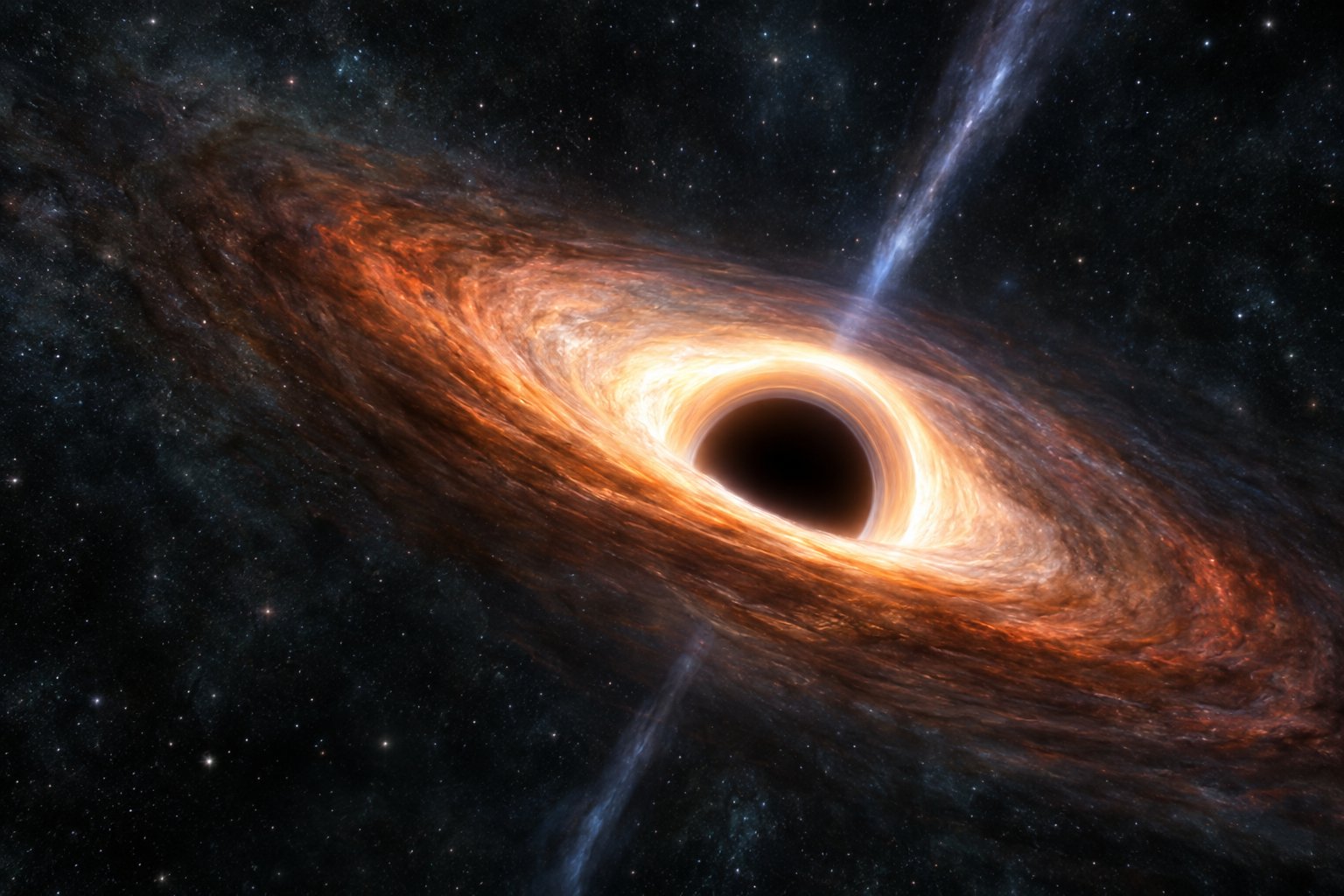
A gap in black-hole masses hints at stars that vanished without exploding
A Caltech-led analysis of 257 black-hole mergers found a shortage of objects between 12 and 16 solar masses. The pattern is consistent with a proposed failed-supernova channel, but it is not a direct observation of one.
Maya Ellison · Nov 19, 2026 · 4 min read
 Stars and galaxies
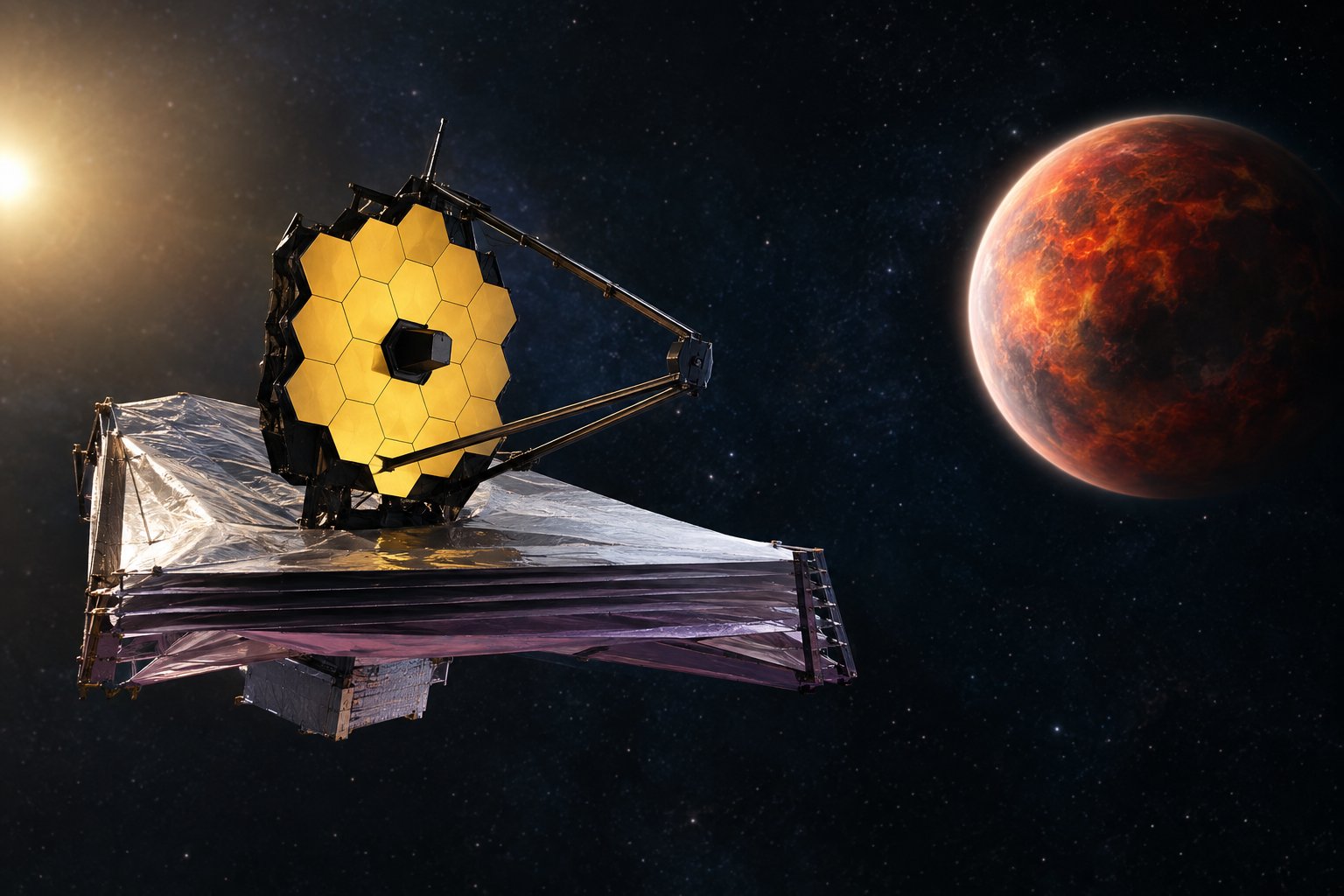
A Possible Atmosphere on TOI-431b, Seen in a Partial Eclipse
A JWST observation of the ultrahot rocky planet TOI-431b points to a possible atmosphere, but one partial eclipse cannot reveal its composition.
Maya Ellison · Nov 18, 2026 · 4 min read
 Deep space and cosmology
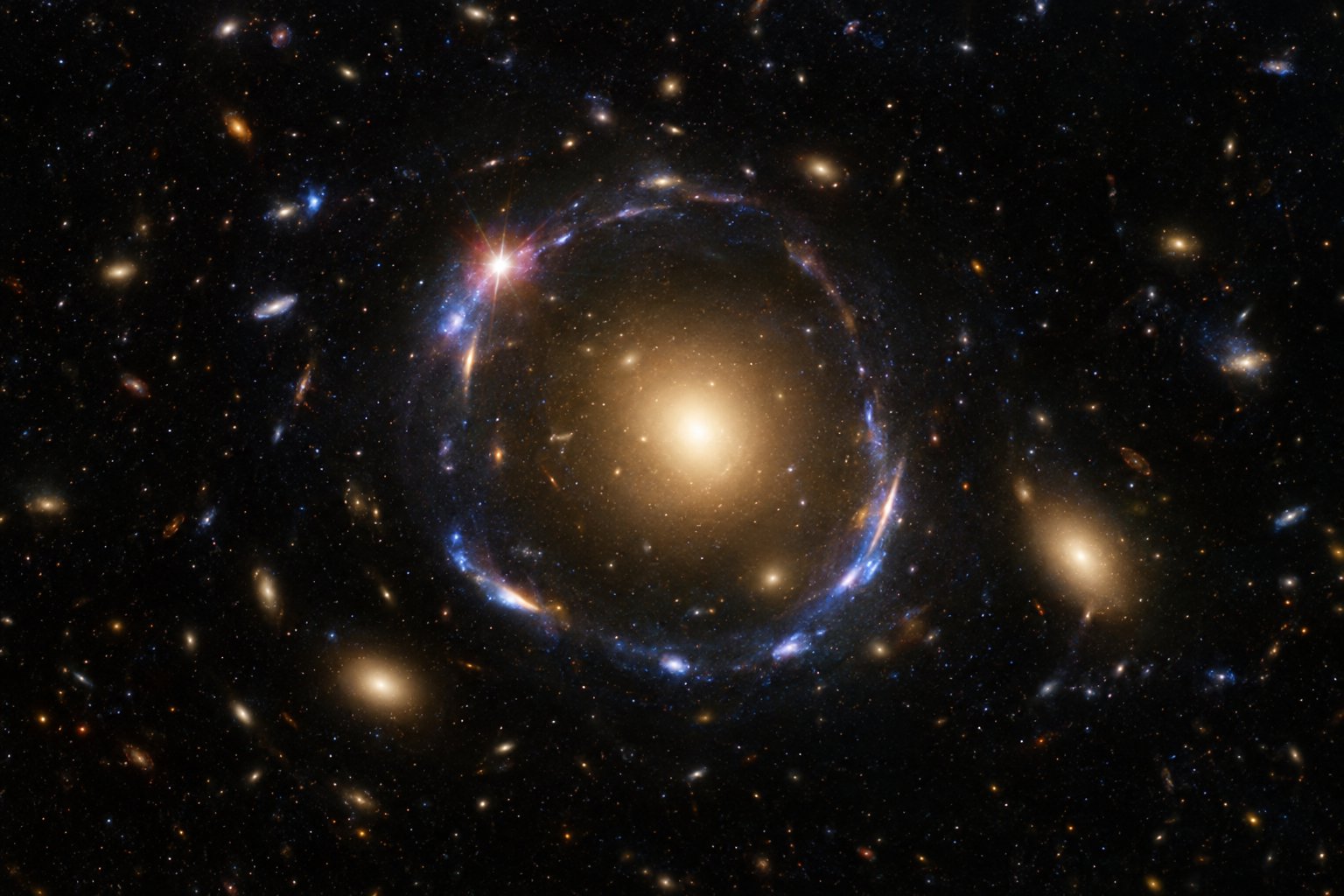
SN Ares: JWST finds a supernova whose next images may take decades
JWST observations reveal the lensed Type IIb supernova SN Ares. Models predict two more images decades from now, but those arrivals—and their timing—remain to be observed.
Maya Ellison · Nov 17, 2026 · 4 min read