
M87’s black-hole ring withstands an independent recheck
A Nature study re-examining the Event Horizon Telescope’s 2017 observations found the ring structure consistent across all data sets, while noting variations in its width and brightness.

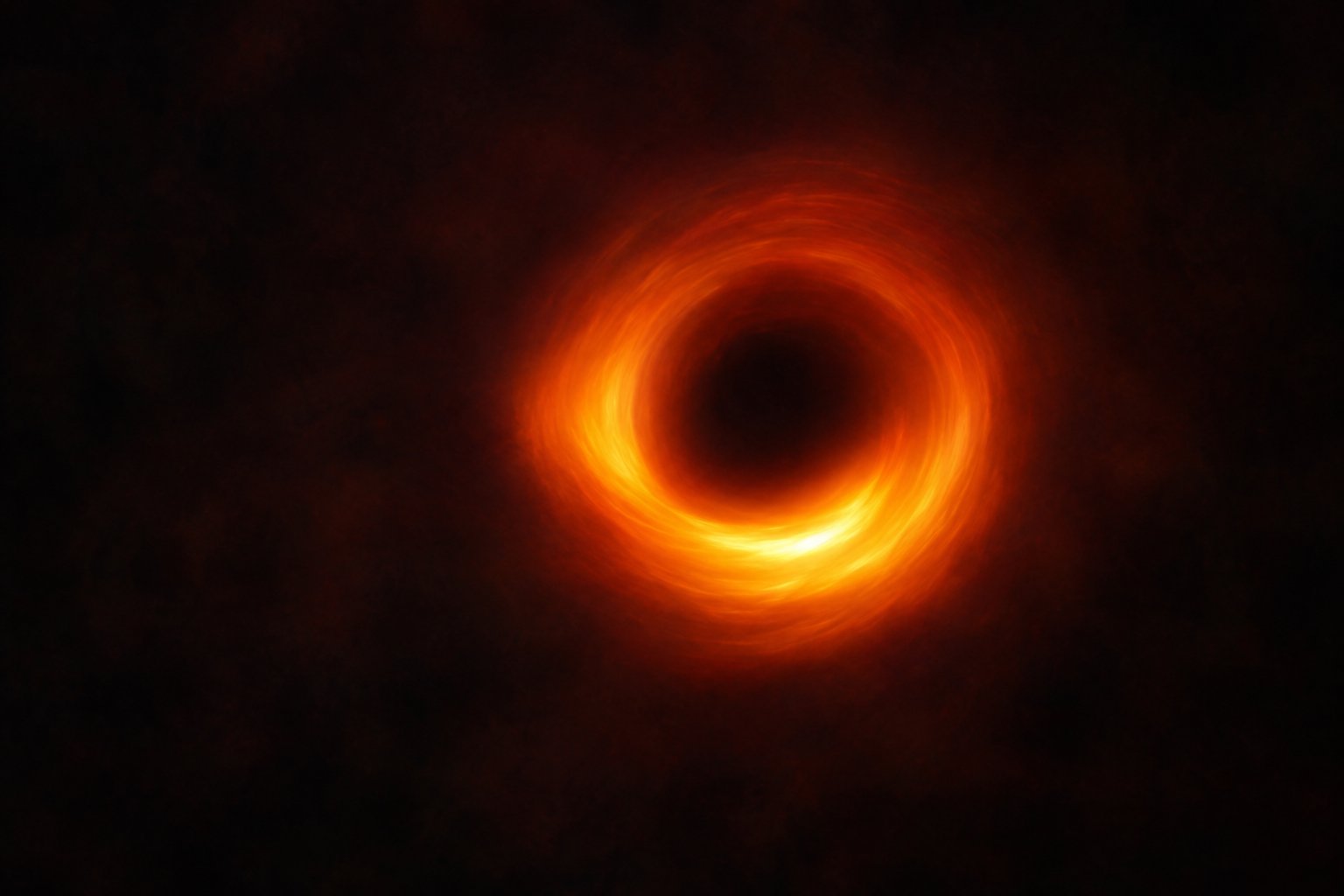
An independent study published in Nature on Nov. 15, 2026, has found the bright ring in the Event Horizon Telescope’s observations of M87 consistent across all the data sets examined. The researchers reanalysed the array’s 2017 radio observations using separate imaging approaches, revisiting the evidence behind the black-hole image first revealed in 2019, according to Orbital Wire.
How the reanalysis tested the ring
The team applied an independent imaging method to the Event Horizon Telescope’s publicly available radio data from April 2017. Orbital Wire reported that researchers completed this check on Dec. 4, 2025, after validating their approach. Across every data set they examined, the ring structure remained consistent. Its diameter and general direction matched the earlier Event Horizon Telescope images, while its width and surface brightness varied around the circumference.
One part of the method used closure invariants: combinations of measurements from three telescopes at a time. Standard analysis combines pairs of measurements. The researchers designed the three-way approach to reduce the effects of atmospheric and instrument errors, which can remain even after correction. In other words, the method was intended to test whether the ring-like structure persisted when those sources of error were handled differently.
The researchers also developed a machine-learning imager called GenDIReCT. Orbital Wire reported that they trained it on ordinary photographs of cats, dogs and cars, rather than giving it prior knowledge of black holes, and then froze its training to limit human bias. Before applying the procedure to M87, they tested it on non-ring structures and real data from other galaxies, including Centaurus A.
The result was not based on the machine-learning method alone. The team also used a separate, traditional statistical imaging approach, which likewise found the ring structure using the team’s closure-invariant data, according to Orbital Wire.
What the result means—and what it does not
The reanalysis strengthens the case that the ring in the 2019 image is not simply an artefact of one particular imaging procedure. That matters because the original Event Horizon Telescope work used four separate imaging teams. Each produced a ring-like structure, although the teams differed over fine details; the collaboration attributed those differences to human and algorithmic biases, Orbital Wire reported.
The finding does not mean every feature in the image has been settled. The independent results agree with the earlier images on diameter and general orientation, but report changes in width and brightness around the ring. Those differences are part of the result, not a reason to treat every pixel or detail as equally certain.
The image is also not a photograph of the black hole’s interior. The Event Horizon Telescope observes the black hole’s shadow, outlined by light from hot gas swirling around the object. Its observations combine radio signals gathered by telescopes around the world so that they work together as an Earth-sized instrument. This technique, called interferometric imaging, enables the array to produce very sharp images from Earth. Orbital Wire compares resolving M87’s black hole to photographing a doughnut on the moon from Earth.
For readers following black-hole research, the main update is about the reliability of an image reconstruction: a new analysis of the same observations supports the ring structure. It does not amount to a new observation of M87, nor does it remove the need to distinguish the observed data from the methods used to turn those data into an image.
The challenge that preceded the new study
The Event Horizon Telescope Collaboration revealed its first image of a black hole on April 10, 2019. The target was the centre of M87, an elliptical galaxy about 55 million light-years from Earth, according to Orbital Wire. The observations showed a bright ring-like structure around the black hole’s shadow.
The interpretation was later challenged. Orbital Wire reported that a team led by Makoto Miyoshi of NAOJ, with Yoshiaki Kato of RIKEN and Junichiro Makino of Kobe University, reanalysed the publicly available observations in work dated June 30, 2022. That team reported a core, an astrophysical jet and knots at M87’s centre, rather than a ring, and said it believed it had resolved the base of the jet. It argued that the ring, which it described as 40 micro-arcseconds across, could result from limitations in the data, including the small number of participating telescopes.
Orbital Wire reported that the new independent findings address the disagreement by finding the ring consistent across the data sets with a different imaging procedure and a separate statistical check. The result adds support for the ring’s structure while leaving variations in its detailed appearance in view.
From the first image to the reanalysis
- The first M87 black-hole image is revealed
The Event Horizon Telescope Collaboration presents an image showing a bright ring-like structure around the black hole’s shadow.
- A team publishes a competing analysis
A reanalysis of the 2017 data reports a core, jet and knots at M87’s centre rather than a ring.
- The independent imaging check is completed
The validated method finds the ring structure consistent across all the data sets examined.
- The new study appears in Nature
The study reports agreement with the earlier images on the ring’s diameter and general orientation, alongside variations in width and surface brightness.
What to watch next
The next questions are how further analyses handle the same observations and what follow-up observations reveal about M87’s centre and its jet. SpaceNews, as cited by Orbital Wire, expects new data reanalyses, further examination of the methods and planned follow-up observations to provide more insight into the galaxy’s centre and the structure of the jet.
The radio data and analysis methods have been publicly accessible, Orbital Wire reported. That openness allows researchers to re-examine the evidence using different approaches. For readers, the useful distinction is between the result supported by this study—the ring structure held up across the data sets—and the finer details that remain variable across the image.
Source: orbital-wire.com
More from the Observatory
 Black holes
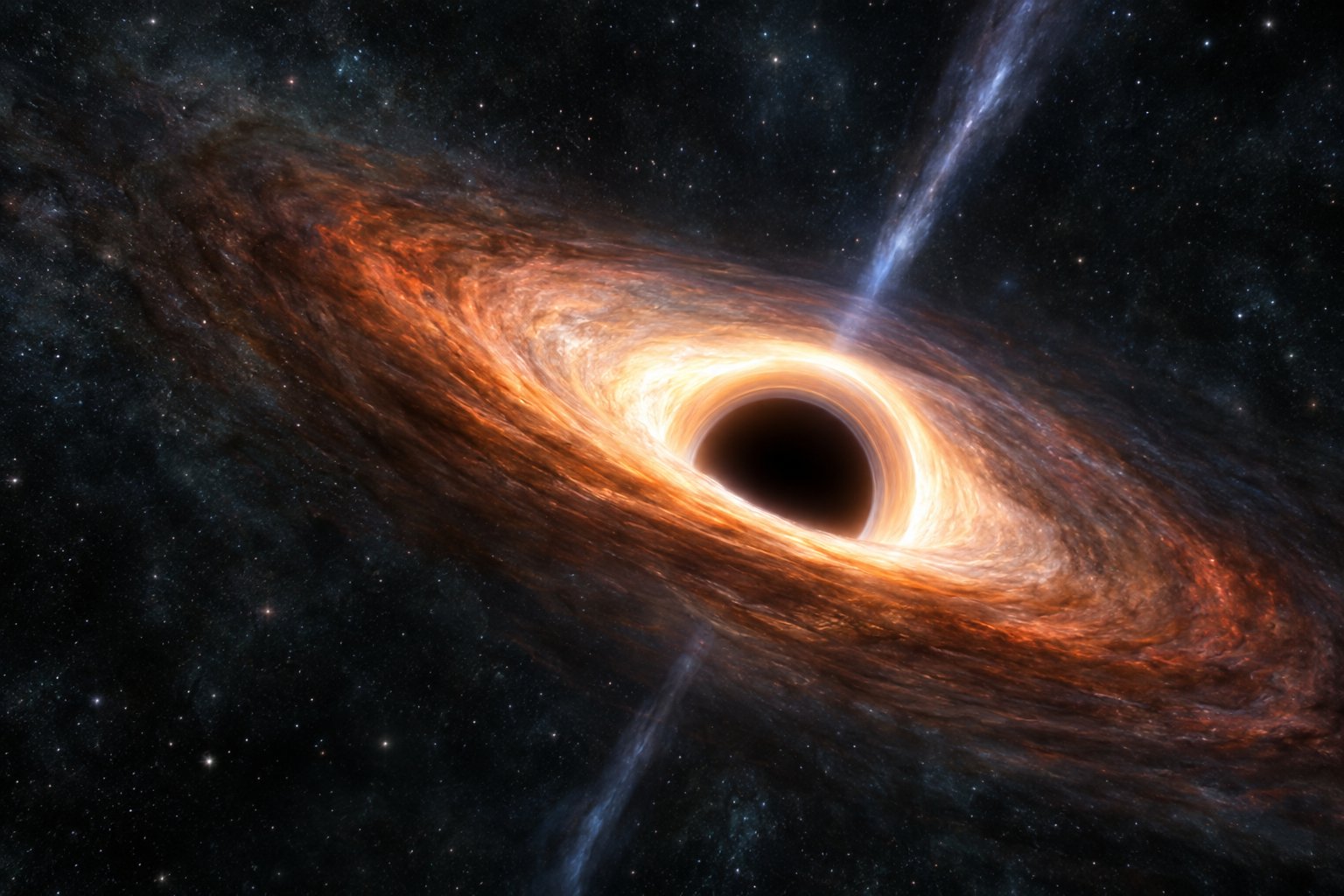
A gap in black-hole masses hints at stars that vanished without exploding
A Caltech-led analysis of 257 black-hole mergers found a shortage of objects between 12 and 16 solar masses. The pattern is consistent with a proposed failed-supernova channel, but it is not a direct observation of one.
Maya Ellison · Nov 19, 2026 · 4 min read
 Stars and galaxies
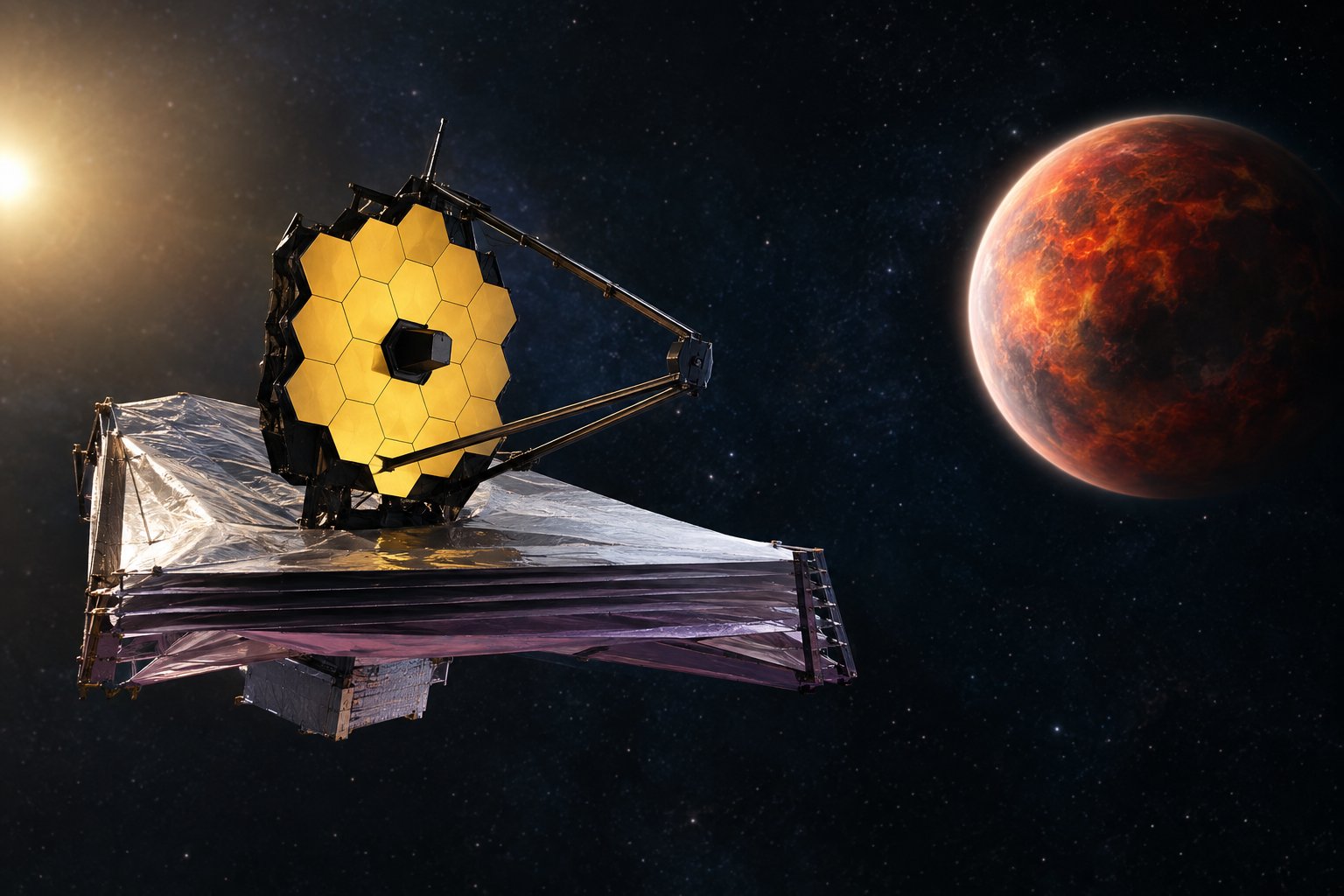
A Possible Atmosphere on TOI-431b, Seen in a Partial Eclipse
A JWST observation of the ultrahot rocky planet TOI-431b points to a possible atmosphere, but one partial eclipse cannot reveal its composition.
Maya Ellison · Nov 18, 2026 · 4 min read
 Deep space and cosmology
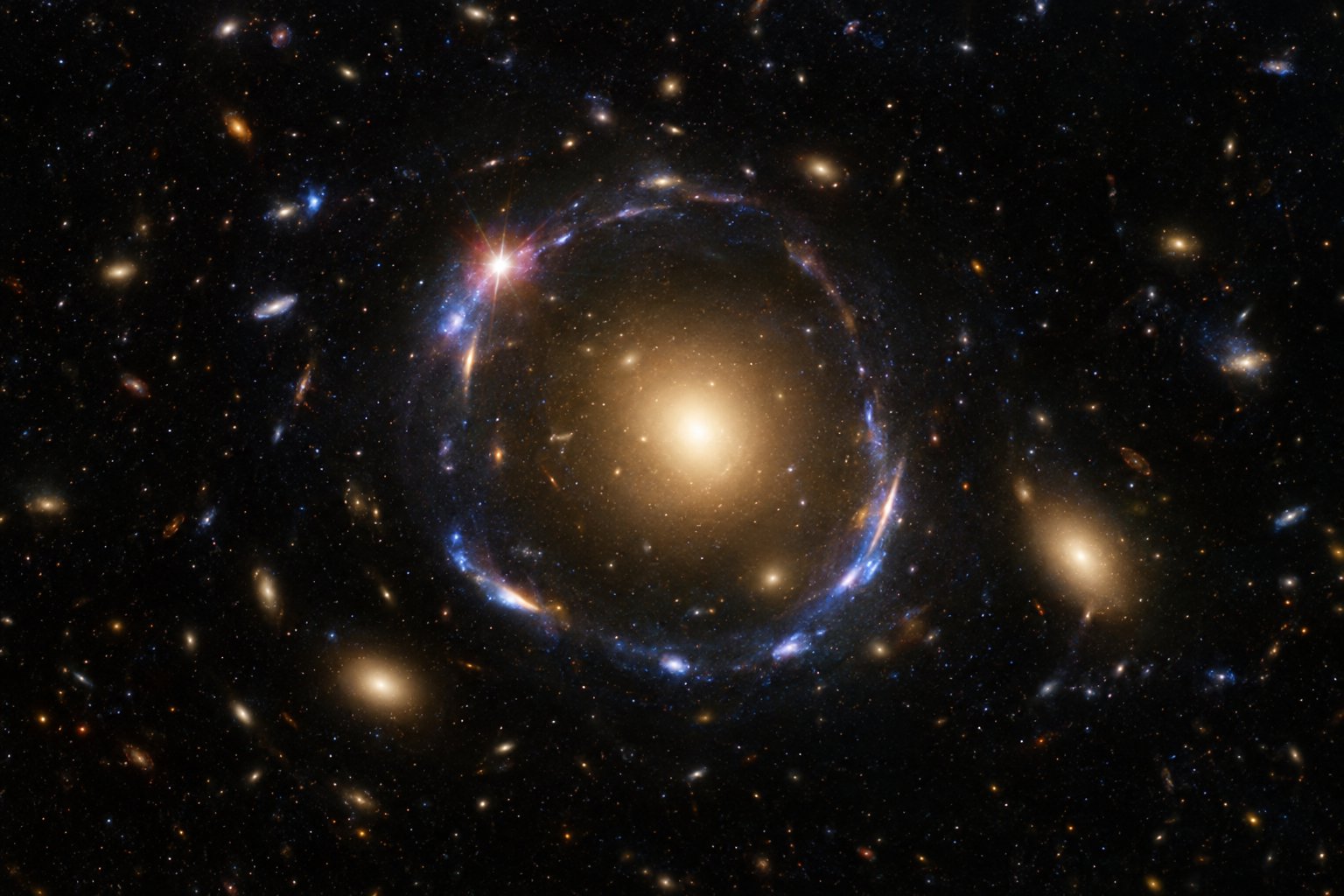
SN Ares: JWST finds a supernova whose next images may take decades
JWST observations reveal the lensed Type IIb supernova SN Ares. Models predict two more images decades from now, but those arrivals—and their timing—remain to be observed.
Maya Ellison · Nov 17, 2026 · 4 min read