
A 113-Day Rhythm Reveals the Engine Behind a Supernova Impostor
A Chandra observation caught an X-ray flare from AT 2016blu, linking its repeated supernova-like eruptions to a compact companion. The evidence points to a black hole or neutron star, but does not yet distinguish between them.

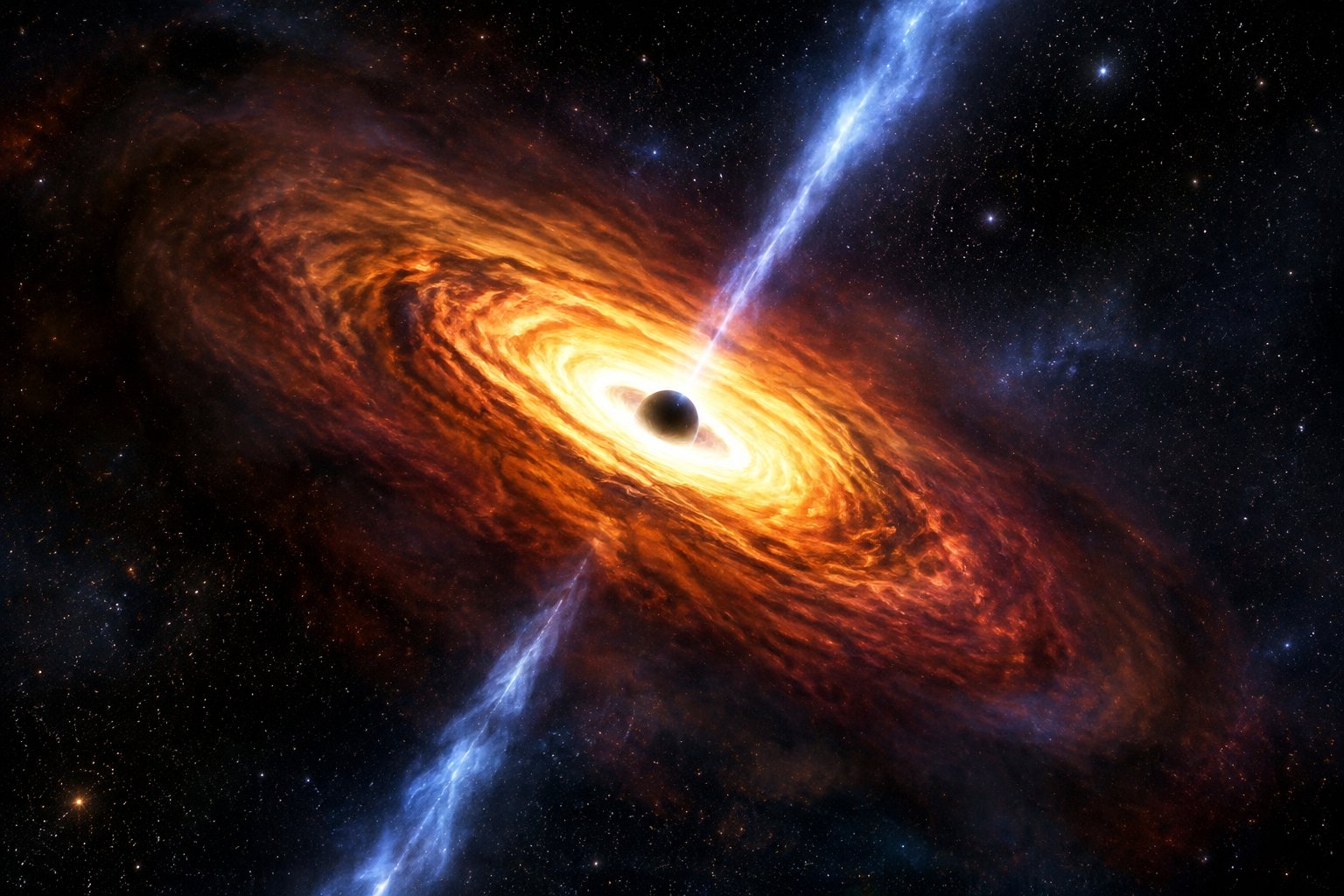
A team led by Mojgan Aghakhanloo of the University of Virginia reports that the star AT 2016blu has a compact companion—a black hole or neutron star—that drives its recurring supernova-like eruptions in the galaxy NGC 4559, about 30 million light-years away. The study appeared in The Astrophysical Journal on November 9, 2026, according to Orbital Wire. A Chandra X-ray observation made during an outburst in March 2026 helped connect the star’s optical brightening to material falling onto its companion.
The X-ray flare behind the result
Orbital Wire reported that astronomers recorded 27 outbursts from AT 2016blu between 2012 and mid-2026. The star brightened and faded on a roughly 113-day cycle, surviving every eruption. That regular pattern mattered: the researchers found that each outburst coincided with a close approach in the binary system’s orbit, rather than behaving like an isolated, unpredictable flare.
To test what was happening, the team scheduled a Chandra Target of Opportunity observation to coincide with a predicted outburst maximum in March 2026. The programme allows astronomers to interrupt scheduled observations for time-sensitive events. According to Orbital Wire, Nathan Smith of the University of Arizona said catching the optical outburst at the right orbital phase was essential to detecting the X-ray flare.
During the outburst, the X-ray brightness rose by more than 100 times, reaching a reported log luminosity of approximately 38.64 ± 0.11 erg per second. Chandra observations from 2001 to 2002, before the recurring eruptions began, showed the source at least 100 times fainter in X-rays than during the outburst. The contrast links the X-ray activity to the eruptive phase.
The researchers interpret the signal as evidence of accretion: matter captured from the massive star’s wind falls toward the compact companion. As the material spirals inward through a hot rotating disk, it can emit X-rays. Orbital Wire reported an inferred accretion rate of at least 8 × 10⁻⁸ solar masses per year, consistent with either a neutron star or a stellar-mass black hole.
the star behaves like a supernova yet cannot be one, since it lives through roughly three eruptions per year.
Why the companion matters
A true supernova destroys its star. A supernova impostor, by contrast, can brighten enough to resemble one from Earth while surviving the eruption. AT 2016blu’s repeated survival made its regular flashes a puzzle: the star behaved dramatically, but did not disappear.
The result gives astronomers a physical explanation for that rhythm. At the orbit’s closest point, called periastron, the compact companion’s gravity can draw in more material from the star’s wind. The increased flow powers X-ray emission; after the close pass, the accretion rate and X-ray output fall until the next orbit brings another encounter.
For readers following black-hole research, the finding is significant but specific. It supports a compact object as the source of the recurring activity; it does not establish that the companion is definitely a black hole. A neutron star remains consistent with the measured X-ray luminosity and inferred accretion rate. The observations also illustrate how timing and X-ray data can reveal the role of an object that cannot yet be identified by type.
A rare kind of unstable star
AT 2016blu is a luminous blue variable, a massive star that can undergo giant eruptions and briefly appear exceptionally bright. Orbital Wire reported that astronomers estimate its mass at no less than 33 times the Sun’s. These stars can shed far more energy in an eruption than in an ordinary stellar wind, as radiation pressure and gravity compete in an unstable part of a star’s temperature-and-luminosity range.
Peter Conti coined the term “luminous blue variable” in 1984. Orbital Wire reported that fewer than 20 confirmed examples are known in the Milky Way. Eta Carinae is a well-known example: it erupted in the 1840s and briefly became the second-brightest star in the sky.
Long-term observations were central to the AT 2016blu result. Amateur astronomers working through the American Association of Variable Star Observers contributed a decade-long record of brightness measurements, alongside observations from ground-based telescopes and robotic survey cameras. That record helped establish the roughly 113-day cycle and predict when to request the Chandra observation.
There was also a nearby-source challenge. Orbital Wire reported that the ultraluminous X-ray source NGC 4559 X7 lies about 10 arcseconds from AT 2016blu and is much brighter during the outburst. Chandra’s sharp imaging separated the two sources, allowing the team to assign the measured X-rays to AT 2016blu rather than to its brighter neighbour.
What remains to be determined
The observations confirm a compact companion, but not whether it is a black hole or a neutron star. Orbital Wire reported that distinguishing the two would require evidence such as X-ray pulsations, a thermonuclear flash on a neutron star’s surface, or a precise spectroscopic measurement of the companion’s mass. The report says none of those measurements is currently possible for AT 2016blu.
The measured X-ray brightness and estimated accretion rate fit both possibilities, so the object’s exact identity remains open. The next step for readers following the system is to watch for further observations that could provide one of those distinguishing signals; no date for such a measurement was given in the report.
Source: orbital-wire.com
More from the Observatory
 Deep space and cosmology
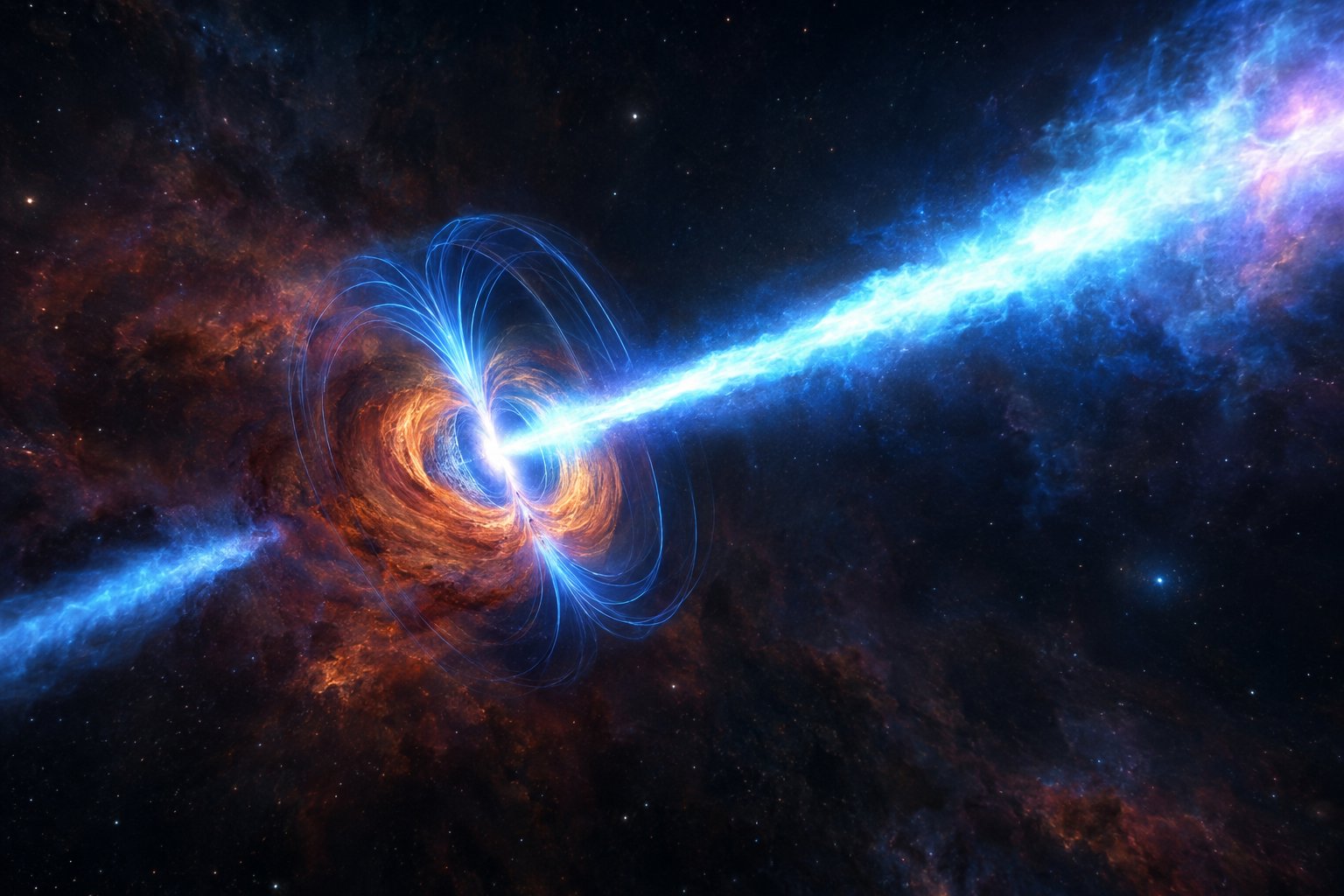
A magnetic hollow-core jet may explain GRB 221009A’s changing signal
A China–Italy team interprets evolving gamma-ray features from GRB 221009A as possible evidence for a magnetized jet with a hollow core. The geometry remains an inference, not a direct observation of the jet’s interior.
Maya Ellison · Nov 20, 2026 · 5 min read
 Black holes
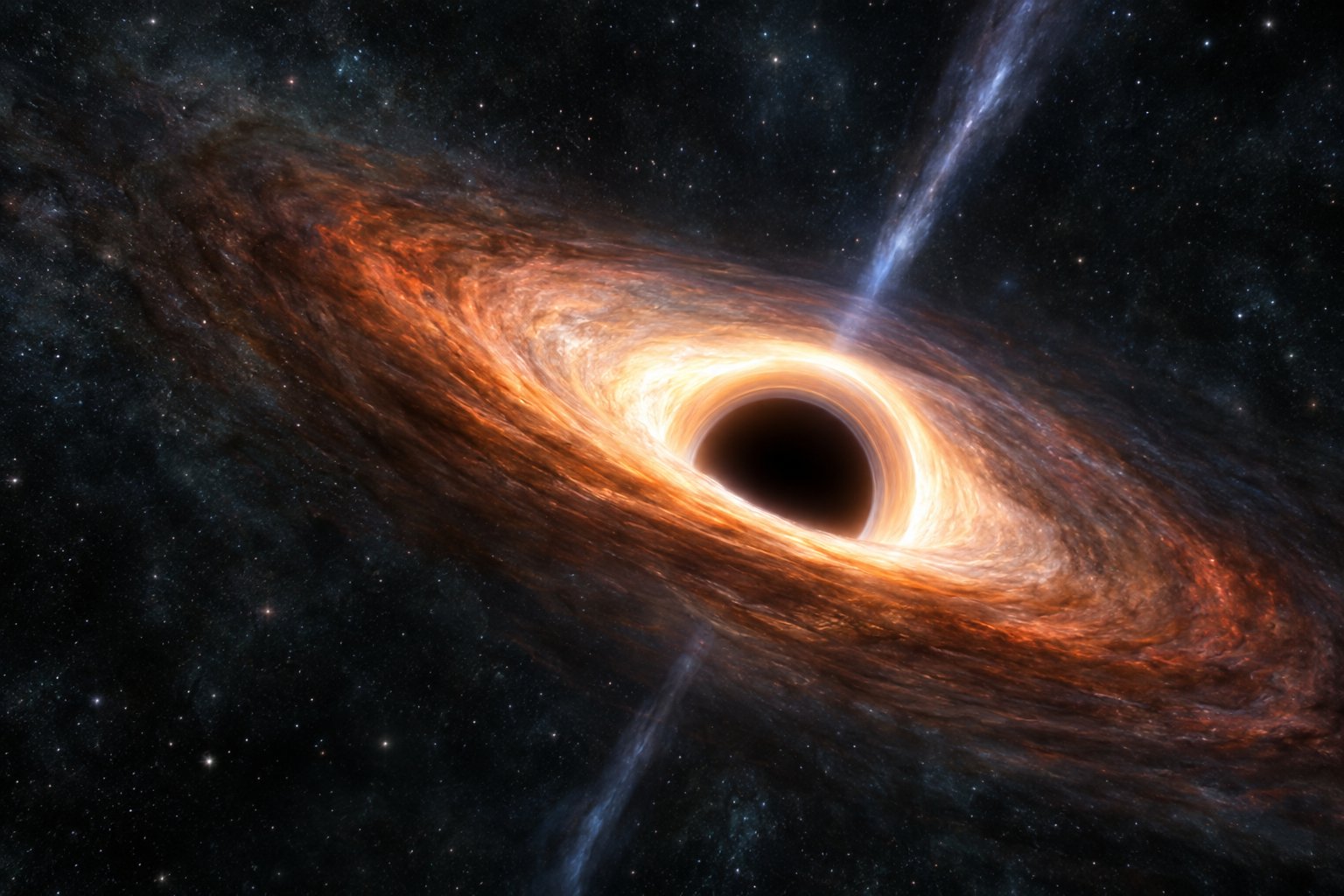
A gap in black-hole masses hints at stars that vanished without exploding
A Caltech-led analysis of 257 black-hole mergers found a shortage of objects between 12 and 16 solar masses. The pattern is consistent with a proposed failed-supernova channel, but it is not a direct observation of one.
Maya Ellison · Nov 19, 2026 · 4 min read
 Stars and galaxies
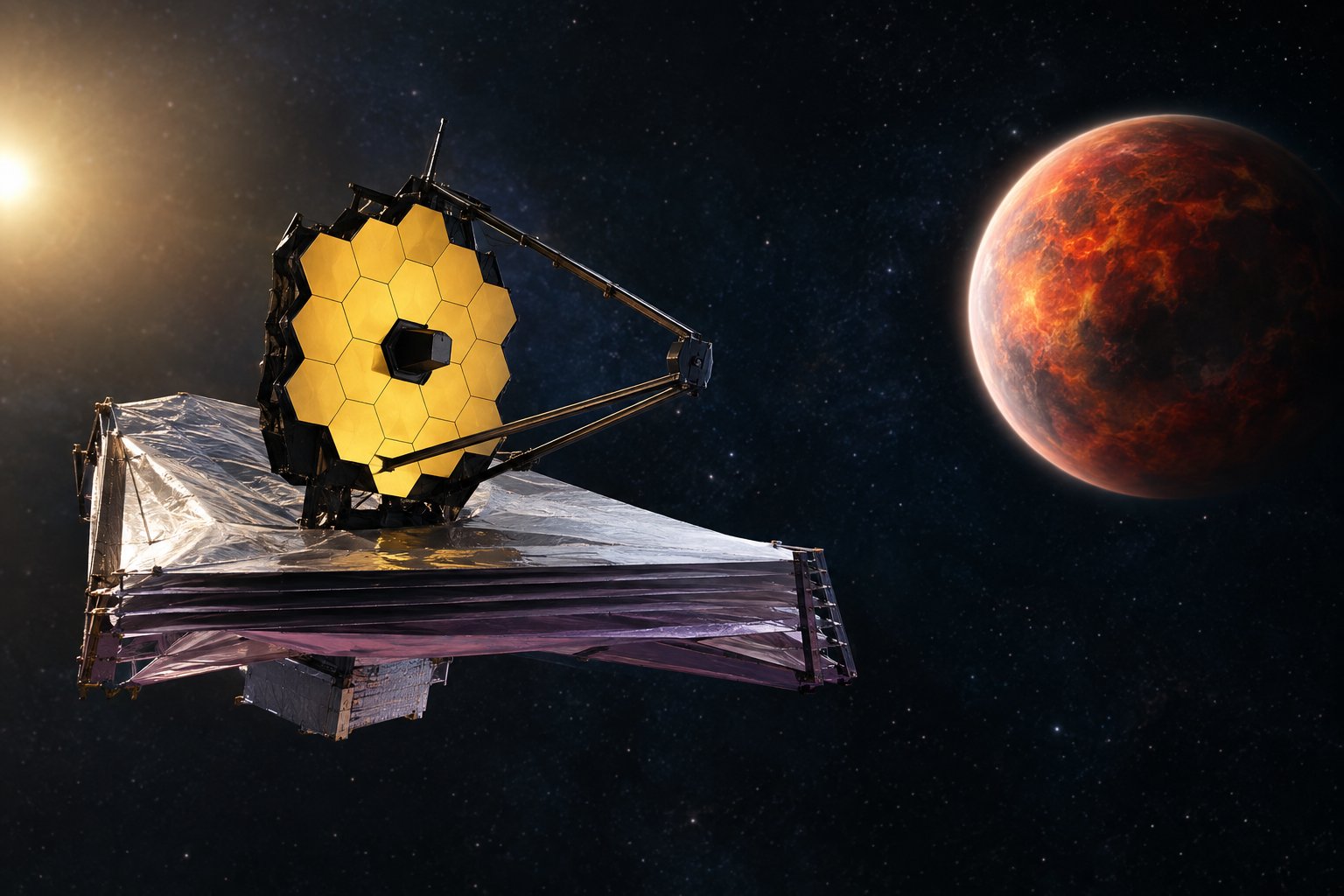
A Possible Atmosphere on TOI-431b, Seen in a Partial Eclipse
A JWST observation of the ultrahot rocky planet TOI-431b points to a possible atmosphere, but one partial eclipse cannot reveal its composition.
Maya Ellison · Nov 18, 2026 · 4 min read