When AI Images Enter the Illustration Brief
A survey cited by Tomorrow’s Publisher finds illustrators encountering generated images in briefs and being asked to redraw or refine them. The findings describe respondents’ experiences, not the share of commissions replaced across the industry.
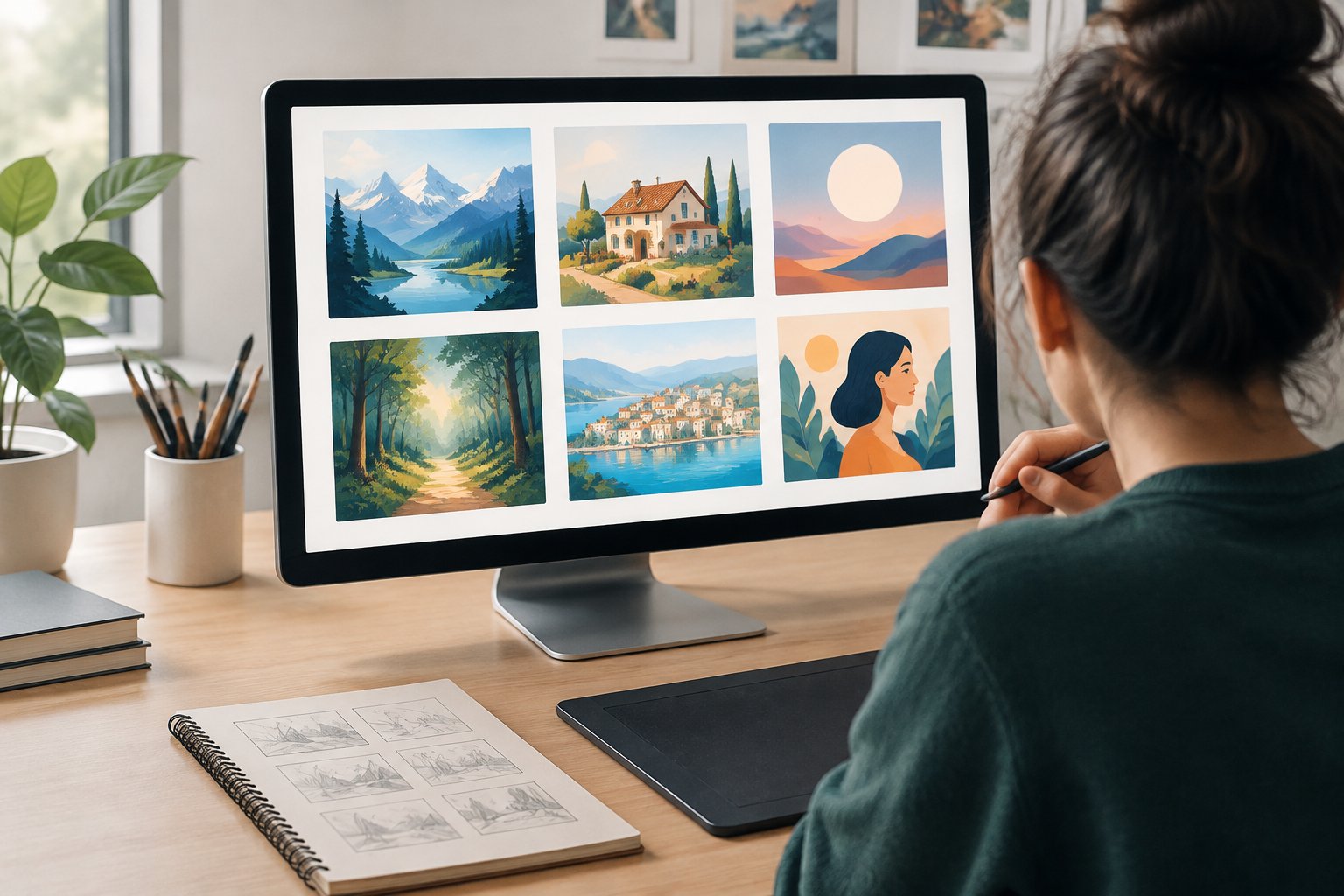
Illustrators are being asked to redraw, refine or copy AI-generated images supplied by clients, according to a new Association of Illustrators survey reported by Tomorrow’s Publisher on 6 November 2026. Among respondents to the relevant questions, 62% had encountered generated images in briefs or moodboards, while 36% had been asked to copy, refine or redraw them. The figures describe what participating illustrators reported; they do not establish how often illustration commissions across the industry are being replaced.
What illustrators say is changing
The Association of Illustrators (AOI) received 549 responses in 2026. Tomorrow’s Publisher reports that 31% of respondents to the relevant questions said clients now expect lower fees because AI tools exist. These findings point to a change that can happen before an illustration is made: a client arrives with an image that may already set a visual direction, and the illustrator is asked to develop or reproduce it.
One anonymised respondent described the shift this way: “I’m basically stripped out of the concept and research work to be left only with an execution role.” Tomorrow’s Publisher says the words appear in the AOI’s report, rather than coming from an interview with the publication.
The survey also asked whether respondents knew they had lost work because a client chose generative AI instead. Tomorrow’s Publisher puts that figure at 46%. BooksNReview, in its 4 November account citing a Resultsense summary, also reports 46% of the 549 respondents said they knew they had lost work to generative AI. That account says more than half reported lower illustration income in the previous 12 months, and 22% said their income had more than halved. It also notes that the AOI acknowledged wider economic conditions as a factor: the income declines cannot all be attributed to AI.
Why the distinction matters
A moodboard is a collection of visual references. Its role in a commission can vary: an image might help communicate an early idea, or it might be treated as a fixed instruction. The survey figures show that respondents are encountering AI-generated images in briefs and moodboards, but they do not measure how clients use those images or how much creative decision-making is transferred from illustrator to commissioner.
For publishers, editors and illustrators, that distinction affects how a brief is understood and what work is included in a commission. A practical step is to clarify whether a generated reference is exploratory or a direction to reproduce, and to discuss the expected work and fee before the commission proceeds. The survey does not establish what any particular client or publisher is doing.
The findings are also relevant to readers who care about how images are made and credited. In BooksNReview’s account of the survey, 98% of respondents wanted AI companies to ask permission before training on protected illustration, and 97% wanted transparency about what had been used. These are respondents’ views, not a statement of what the law requires.
What the survey can—and cannot—show
The 46% figure is a report of respondents’ experiences, not an estimate of the proportion of all illustration commissions displaced by AI. The survey asked illustrators, not commissioning editors or art directors, so it does not provide a measure from the client side. Nor does it establish that every reported loss or fall in income was caused by generative AI.
Comparisons with 2025 also need care. Tomorrow’s Publisher says the 2025 AOI survey had 5,000 respondents and reports 32% said they had lost work because a client chose AI. BooksNReview gives a different account of the earlier survey: it reports 6,844 respondents and a figure of 32.4% who said they had lost work to AI alternatives. These reports differ on both the earlier sample size and the precise percentage. The 2026 survey had 549 respondents, and the samples were not the same illustrators followed over time. The change in reported figures should not be treated as a direct measure of a market-wide trend.
BooksNReview also reports differences across fields: 80% of respondents working in games and interactive media had seen AI material in briefs, while 64% in concept art and visual development said clients were using AI in place of a commission. It gives a 42% figure for children’s books, but says the measure behind that figure is unclear. These results offer context, but they should not be treated as directly comparable measures of replacement across sectors.
What to watch next
Further detail on how respondents were recruited, when the survey ran and the exact wording of its questions would help readers interpret the results. Clear definitions also matter when comparing reported job losses with images appearing in briefs: they describe different experiences.
BooksNReview’s account places the survey’s concerns alongside unresolved legal developments. It reports that illustrator Axel Scheffler said on 30 October he was seriously considering legal action against AI companies, but had not named a target and no decision had been made. The same account says Penguin Random House and author-illustrator Ingo Siegner brought a separate case against OpenAI in Germany, with a Munich Regional Court ruling expected in spring 2027. Those developments do not determine what the survey figures mean, but they are part of the wider debate over consent and the use of illustration in AI training.
For now, the clearest conclusion is narrower: respondents report that AI-generated references are appearing in illustration briefs, and some are being asked to redraw or refine them. The survey records those experiences; it does not show how many commissions across publishing or illustration as a whole have been replaced.
Source: tomorrowspublisher.today
More sources (1)
More from the Observatory
 Black holes
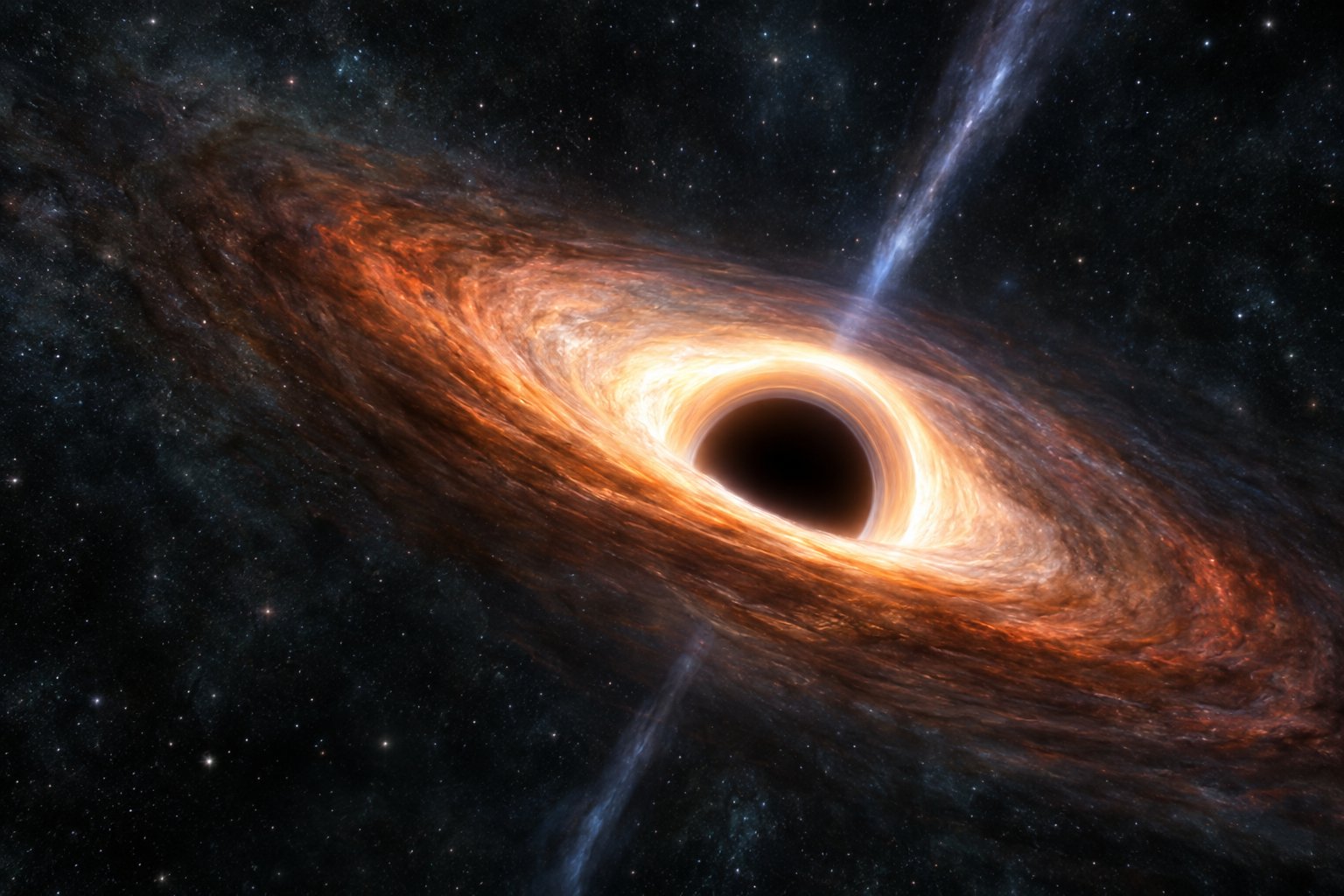
A gap in black-hole masses hints at stars that vanished without exploding
A Caltech-led analysis of 257 black-hole mergers found a shortage of objects between 12 and 16 solar masses. The pattern is consistent with a proposed failed-supernova channel, but it is not a direct observation of one.
Maya Ellison · Nov 19, 2026 · 4 min read
 Stars and galaxies
A Possible Atmosphere on TOI-431b, Seen in a Partial Eclipse
A JWST observation of the ultrahot rocky planet TOI-431b points to a possible atmosphere, but one partial eclipse cannot reveal its composition.
Maya Ellison · Nov 18, 2026 · 4 min read
 Deep space and cosmology
SN Ares: JWST finds a supernova whose next images may take decades
JWST observations reveal the lensed Type IIb supernova SN Ares. Models predict two more images decades from now, but those arrivals—and their timing—remain to be observed.
Maya Ellison · Nov 17, 2026 · 4 min read